What I Value

“ Caritas, Veritas, Fortitudo . . . ” During my childhood, I experienced medical conditions that heightened my awareness of how medicine wa...

Saturday, December 11, 2021

HOLIDAY ADVICE BY PATRICIA FENNELL IN WebMD

In the midst of a busy holiday season, it is more important than ever for those with chronic illness to communicate, advocate and maintain clarity around their capacities and needs. With the added concerns and precautions of navigating COVID-19, supportive conversation with loved ones is key to managing expectations and creating joyful holiday experiences.

Clarity & Advocacy

Chronic illness calls for clarity and advocacy. Friends and family need clear communication in order to manage expectations. Patricia Fennell (MSW, LCSW-R) coaches patients on how to negotiate their needs. "People don't know how to ask for what they need. They'll stay home from a holiday party because they can't stand that long. We need a new social etiquette for people with chronic illness." Fennell advises stating your needs in behavioral rather than general terms. "Don't just tell Aunt Jane you'll have to leave early. Tell her you've been feeling fatigued and can stay only two or three hours. Also, tell her that standing tires you out — ask her to have a seat for you. Putting it in behavioral terms makes it easier for Aunt Jane to conceptualize and to accommodate." 

Firm & Flexible Boundaries

No one understands your needs better than you. Pre-set boundaries are key in maintaining optimal health over the holidays. Having predetermined end times for hosted gatherings, as well as extra prep and post time built into your schedule for recovery can be helpful. Keeping departure time open ended at gatherings is a good idea, with a gentle way to excuse yourself when you're ready. The best boundary to feel comfortable with is simply, saying no when needed.

Ask For & Employ Help

When hosting, ask family or close friends to assist with cooking or other tasks that can be shared. "Asking in advance allows people to help gracefully." Order groceries or catering in advance and have it delivered. Hire extra support for pre and post clean-up. Prep as much as possible in advance and consider the use of disposable dishes and flatware when appropriate. 

Gratitude & Giving

The holidays can be an excellent time to reflect on what you are most grateful for, and to focus on the spirit of giving. "Take toys to the Marine Toys-for-Tots Foundation, take food to homebound seniors through Meals on Wheels, or provide goods and services to those in need. It will boost your spirit and remind you what the holidays are about."

The numbers of people with chronic illness are growing, and that's not necessarily a bad thing, says Fennell. "People are living today with heart disease and cancers that were once considered terminal illnesses, not chronic illnesses." Next time you are at a holiday party, or anywhere, look around. Some of those healthy-looking people may have chronic illnesses too. The growing numbers also mean you're not alone. 


Read full WebMD article


Jennifer Howard
Contributed by
Jennifer Howard


Friday, December 3, 2021

Elements of Suffering in Myalgic Encephalomyelitis / Chronic Fatigue Syndrome


HealthcareThe MDPI publication, Healthcare, spotlights, "Elements of Suffering in Myalgic Encephalomyelitis / Chronic Fatigue Syndrome: The Experience of Loss, Grief, Stigma, and Trauma in the Severely and Very Severely Affected," by authors Patricia Fennell, Nancy Dorr and Shane George. Healthcare is an international, peer-reviewed, open access journal (free for readers), which publishes original theoretical and empirical work in interdisciplinary medicine and health care research.

"Few people understand what it is like to live with ME/CFS. Trying to explain it to others can be exhausting and frustrating. I just found your wonderful article on ME/CFS in Healthcare which describes the physical, the psychological, and the social effects of this illness with compassion and clarity. It’s exactly what so many people, especially providers, need to hear. I will be recommending it widely."

MDPI Healthcare Article Abstract:

People who are severely and very severely affected by Myalgic Encephalomyelitis / Chronic Fatigue Syndrome (ME/CFS) experience profound suffering. This suffering comes from the myriad of losses these patients experience, the grief that comes from these losses, the ongoing stigma that is often experienced as a person with a poorly understood, controversial chronic illness, and the trauma that can result from how other people and the health care community respond to this illness. This review article examines the suffering of patients with ME/CFS through the lens of the Fennell Four-Phase Model of chronic illness. Using a systems approach, this phase framework illustrates the effects of suffering on the patient and can be utilized to help the clinician, patient, family, and caregivers understand and respond to the patient’s experiences. We highlight the constructs of severity, uncertainty, ambiguity, and chronicity and their role in the suffering endured by patients with ME/CFS. A composite case example is used to illustrate the lives of severely and very severely affected patients. Recommendations for health care providers treating patients with ME/CFS are given and underscore the importance of providers understanding the intense suffering that the severely and very severely affected patients experience.


ME/CFS and the Fennell Four Phase Model:

Fennell’s Four-Phase Model is useful for defining and describing four phases that occur in ME/CFS. This model has been thoroughly developed over the last several decades through clinical encounters, patient testimonies, and empirical research. The model explicitly captures the changing experience of patients over time in all domains of their lives — their physical, psychological, and social-interactive worlds. 

The full text of our Healthcare article contains a section describing the course of ME/CFS using the Four-Phase Model to help illustrate how patients present in the physical-behavioral, the psychological, and the social-interactive domains during each phase of the model. The general description of the three domains in each phase includes a table outlining its characteristics. A composite case history illustrates how these generalizations manifest in actual patients, focusing on those who are severely and very severely affected.

By serving as a narrative or cognitive map, the phase description helps to lessen the intense fear and anxiety frequently experienced by the severe and very severely affected ME/CFS patients and their families. It will also help them to know they are not alone, their experience is shared by others, and they are understood. They now have a method of validating their experiences and making them known to others. The narrative helps them develop a sense of what is happening to them and provides a degree of order and coherency about their illness experience. In addition, the mapping aspect of the phase process helps promote understanding and adjustment to the cognitive impairments in concentration, memory, and decision making that often affect those with ME/CFS.


How Health Care Professionals Can Help

Severely and very severely affected patients suffer profoundly. For health care professionals to adequately treat their patients, they need to understand all that composes and creates their suffering: struggling with uncertainty, ambiguity, chronicity, stigmatization, trauma, and rejection. These elements create losses for the patient, and they subsequently grieve these many and varied losses, including lost friends, family, career, and life as they knew it (or imagined it). Not only do the patients grieve their losses and traumas, but so do the loved ones around them — spouses, parents, and children. Thus, to assess and treat, the suffering must first be described, understood, witnessed, and, most importantly, abided. Please see our full article in Healthcare for a list of important things health care professionals can do to help, in addition to the medical protocols.


Contributed by
Jennifer Howard


Wednesday, November 3, 2021

"The Climb" — A film production by Creative Action Unlimited

The Climb
The Climb, an original film about class and race in America, will premiere November 19 at Madison Theater in Albany, New York. 

The Climb is a project by Creative Action Unlimited. It raises public awareness and inspires community action about America’s systemic economic oppression of Black people.

Performed by Kristoph DiMaria, Jae Gayle, Michael Lake, Elisheva Novella, Tony Pallone, Sara Paupini, Eleah Peal, David Quinones and Siobhan Shea 

Directed by Michael Kennedy with Maghen Ryan, Assistant Director, and Cinematography by John Romeo. 

  • View the film trailer here: https://youtu.be/LnnUPWiEzTU

  • Limited presale tickets may be purchased here:  https://form.jotform.com/212735840032044 

  • Tickets will be available at the door the night of the event.

  • All screenings begin at 7 p.m. Premier on November 19, 2021, with subsequent showings on November 20, 26 and 27, 2021 at The Madison Theatre, 1036 Madison Avenue, Albany, NY 12208.

  • Please note: proof of vaccination is required for admission.


Contributed by Jennifer Howard


Thursday, October 28, 2021

ACR Convergence 2021

Colleagues and experts from around the world have been gathering every year since 1934 to share revolutionary science and discuss timely topics in rheumatology around prevention, diagnosis, and treatment of rheumatic diseases. 

The American College of Rheumatology (ACR) Convergence 2021 is an all-encompassing virtual experience designed for the global rheumatology community. 

The conference takes place November 3-9, with extended programming on November 10. The annual event has become the preeminent scientific event for rheumatology, with over 16,000 attendees in 111 countries.

Following our team's research, examining how the COVID–19 pandemic may be affecting the health and wellness of people with scleroderma, the following poster presentation was created. In highlighting the experience of patients with scleroderma during the COVID-19 pandemic, we are better able to respond in ways that help people stay well.

Pandemic andPatients: Examining Health-Related Behaviors of Patients with SystemicSclerosis During the COVID-19 Pandemic Tuesday, November 9, 2021. Session: Patient Outcomes, Preferences and Attitudes. Nancy Dorr, Ph.D. (The College of Saint Rose), Patricia Fennell, MSW, LCSW-R (Albany Health Management Associates, Inc.), and Lee Shapiro, MD (Steffens Scleroderma Foundation and Albany Medical College).

To learn more about ACR Convergence 2021, please visit https://www.rheumatology.org/Annual-Meeting


by Jennifer Howard


Saturday, October 9, 2021

SHIREY ARCHIE'S "STAND AGAINST RACISM" LEADS TO NEW FILM

Shirey Archie
Shirey Archie

Activist, Shirey Archie, holds a sign that reads, "Stand Against Racism" on the corner of a busy intersection in Albany, NY the first Saturday of every month. Archie receives enthusiastic honks from supporters, choice words from detractors, and an understanding of the reality that is the space in the middle — the silence. "I knew I had to do something. If there is something you are concerned about, there is something you can do about it." Archie's motivation? His teenage son. "As an African American in this society, I have learned how to navigate racism in America. When my son was born, I realized he was going to have to learn the same. I was sad and angry. I decided to do something." 

Creative Action Unlimited is a non-profit organization that creates original theater and films that address current social issues to raise public awareness and to inspire audience members to take action in terms of social change. Director Michael Kennedy invited a group of actors, artists and activists from the Capital region, people who identified as Black or a person of color, to help her create a theater piece around the topics of race and racism. "Working with people of color is amazing," Archie remarked. "I've always worked in spaces, white spaces, where I am the only one. So to work with a group of people who I didn't have to explain about who I was and what I was saying was an amazing event."

Archie: "Stand Against Racism
"The encounters and relationships with other performers were dynamic, we sat in a room, we brainstormed, we created individual monologues, and we collaborated with Ms. Kennedy, who condensed and edited the piece into the version of the play that finally appeared on stage." When asked if the experience of participating in Whitewashed: The Racism Project was freeing, Archie responded, "`Freeing’ is not even the word for it. Just to not be on guard in a space is an amazing feeling."

The play (now turned feature film) is provocative and was repeatedly sold out and well received. It asks the audience to address historical racism but also confront systemic racism, white fragility, and internalized racism. "When I started doing anti-racism work, I had to stop and ask myself, what were my biases? And I had a few. I found that I had to do something about those before I could ask any other person to do something about theirs."

"We are truly a divided people, divided to the point where we won't even take time to talk about the differences anymore. We need to be able to talk across color lines, so that we can solve the problem as a country. Waiting on people to tell us what to do has not worked well. We as individuals, communities and small groups of folks, need to get together, make decisions about what to do and then commit to those actions over time."


We encourage everyone to go see Whitewashed: The Racism Project by Creative Action Unlimited.


Written by Jennifer Howard


Paul Grondahl, Albany Citizen-Times, October 19, 2022
"He held a sign to fight racism. He got racist responses"


Friday, September 10, 2021

Patricia Fennell Appears on "Love Mia Vita" Podcast

Albany Health Management Associates' founder and CEO, Patricia Fennell, joins Femme Pharma's founder and CEO, Gerie DiPiano, and Medical Director, Dr. Deborah Saltman, on the Love Mia Vita podcast.

  • FemmePharma

    FemmePharma
    FemmePharma has been reinventing women's health care for over 20 years. Their mission
    — your wellness. Starting as a pharmaceutical research and development company, this team has become a partner for women over 40 who want to feel their best. With pharmaceutical-grade ingredients, strict product manufacturing (GMP) standards, and a commitment to personal service, their mission is to provide women with relief from the symptoms of menopause through products they can have confidence in. FemmePharma solutions are created by women, for women, and are the highest quality available without a prescription.

  • Love Mia Vita Podcast

    Love Mia Vita Podcast
    The Love Mia Vita podcast is hosted by Gerie DiPiano, founder and CEO of FemmePharma, and Dr. Deborah Saltman, Medical Director. They want to educate women and help them improve their health and happiness.

    ‘Love Mia Vita’ means ‘Love My Life’ and that is exactly what they encourage you to do. Ms DiPiano and Dr. Saltman interview experts in all aspects of women’s health to investigate the misunderstood, sometimes even undiscussed, aspects of life. They engage in lively conversation of tips (and myths), sexuality, feminism, and everything else that is part of womanhood. (Listen*)


  • Patricia Fennell & The Fennell Four Phase Model

    Patricia Fennell, CEO of Albany Health Management Associates, will discuss the Fennell Four Phase Model as it pertains to chronic illness and women's health. This model has been thoroughly developed over several decades through clinical encounters, patient testimonies, and empirical research. The model explicitly captures the changing experience of patients over time in all domains of their lives — their physical, psychological, and social-interactive worlds. 

    Topics addressed within the podcast include: Ms. Fennell's background and the reason for developing the FFPM, each phase within the model, how patients progress within the phases, and how practitioners and loved ones can help.
  • Tune Into The Podcast

Tune into the Love Mia Vita podcast on or after, Monday, September 27, 2021 via Spotify, Apple Podcasts or your preferred streaming platform.

* The Podcast is now available from both Apple and Spotify Podcast platforms. It will appear on the Love Mia Vita platform soon. 


Written by Jennifer Howard 


Wednesday, May 5, 2021

COVID: The Sequel

Mass vaccination and adjusted social behavior may finally get the pandemic under control. Then the medical world will have to turn its attention to the next chapter — millions of people suffering from long-haul COVID

As the pandemic took hold in the United States in March 2020, Caroline, a healthy, athletic woman in her late 20s, began to feel unwell. There was no COVID-19 test to be had at that point, but she called her clinicians to describe mild to moderate symptoms such as fever, respiratory difficulty, gastro-intestinal irritation, and loss of taste and smell — which came and went, and not all at the same time.

Caroline’s clinicians diagnosed her remotely as having COVID.

The fever, the teeth chattering, and the gastro symptoms went away — but not the fatigue, the body pains, or the neurocognitive symptoms, including sleep disturbance. Ten days later, 20 days later, a month later, she still hadn’t fully recovered.

Finally, eight months or so after the onset, Caroline had a COVID test, but it was negative, and an antibody test showed no antibodies. And without a positive test or antibodies in her system, she has found it difficult to find someone to treat or manage her condition. Most clinicians tell her that her persistent symptoms might or might not be COVID. And some say things like, “I have no idea what to tell you,” or “Are you sure this isn’t stress?”

Dan, in his late 30s, is a care provider for diagnosed COVID patients and their families. For a while, he continued to test negative, but began having symptoms about eight months ago. He was never hospitalized, and never had a positive test, without which the clinician who was seeing him would not diagnose him, in spite of all of the clinical indicators.

Dan still suffers from many long-term symptoms; his new clinician is helping him put together a team of specialists to develop and manage his treatment.

Caroline and Dan appear to suffer from what has come to be known as “long-haul COVID,” in which some manifestations of their illness just don’t go away, with symptoms sometimes mimicking those of other types of chronic illness.
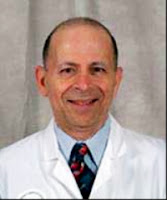
Kenneth J. Friedman, PhD

In fact, more prior investment in chronic illnesses, and a better understanding of how they work, could have helped us to prepare for long-haul COVID, says Ken Friedman, Ph.D., a retired professor of pharmacology and physiology and a longtime researcher of chronic conditions.* Instead, the medical establishment in the United States has been slow to recognize and research chronic illness, and soon will pay the price: dealing with an onslaught of as many as 9 million long-haul COVID cases in the coming years in the United States alone, based on Friedman’s statistical analysis of recorded COVID cases.

Patricia Fennell, MSW, LCSW-R, a researcher and clinician who has been researching and treating chronic illness for more than 30 years, agrees with Friedman’s assessment. “The medical establishment,” she says, “has been slow to recognize the need for specific treatment approaches for the chronically ill, and to integrate them into their medical education curricula. And from what I can already see in requests for treatment of long-haul COVID, we are not prepared for what’s coming.”

So far, Friedman warns, “we have not seen a response proportional to the severity of the crisis that is about to befall us.”

* * * * * *

Friedman, a Brooklyn native, has a combined degree in biology and chemistry from Lawrence College in Appleton, Wisc., and a Ph.D. from the State University of New York at Stony Brook.  He was a NIH Postdoctoral Fellow at UCLA before becoming a Staff Fellow at the National Institutes of Health.  He became an Associate Professor at New Jersey Medical School in Newark.  Friedman had decided he didn’t want to be a medical doctor — “I really didn’t like the sight of blood” — and was more interested in helping people through research.

One day, his desire to help people hit close to home and forever changed the trajectory of his research career.

Someone close to Friedman, an academic standout, had been admitted to a major university. After a few months at college, she became very ill, and explained her symptoms to Friedman. “I said, ‘You have mono. Go to student health services. Mono is very common in college students. They’ll know what to do'.” The student health service misdiagnosed the patient and sent her back to her dorm room.  Eventually, the young patient needed to be rescued from that dorm room.

In the months that followed, the patient tried but was unable to be diagnosed through traditional channels.  Friedman stepped in and persuaded the clinical faculty of his own medical school to examine and diagnose her.  Unfortunately, those physicians too were perplexed and unable to render a diagnosis.

At Friedman’s suggestions, despite not having a confirmed diagnosis, treatments aimed at alleviating symptoms were tried. Eventually, the patient regained sufficient health to, in an extended timeframe, complete college and become employed.  Full health, however, was never fully restored, and eventually the patient became housebound.

“Having a chronic illness,” Friedman says, “is life-changing not only for the patient, but for the family. My initial objective was to cure her. And that was based upon the belief that this was a disease like any other disease,” caused by an infectious agent, “and therefore cured by the removal of that infectious agent.”

“And that belief was based on what was written in the medical literature. But the medical literature was wrong.”

According to Friedman, Long COVID demonstrates that ME/CFS, Chronic Lyme disease, and other chronic, fatiguing illnesses which occur after a significant infection, exhibit similar symptoms and should be classified as belonging to a category of disease which he and colleagues have named PAPIS (Post Active Phase of Infection Syndromes).  He and his colleagues have established an ongoing collection of research articles in the journal Healthcare to promote the publication of research articles on the subject of PAPIS. “Some 90 years after the U.S. Public Health Service first described ME/CFS as a ‘polio-like’ illness, people are beginning to understand what that means!” 

* * * * * *

“For many doctors, the strange symptomology of long-haul Covid calls to mind another mysterious, poorly understood condition: myalgic encephalomyelitis, more familiarly known as chronic fatigue syndrome,” wrote Moises Velasquez-Manoffin in a January 21 New York Times article titled “What If You Never Get Better From COVID-19?”

Velasquez-Manoff went on to point out that “ME/CFS-like syndromes have been linked with infections for more than a century — including, most recently, those caused by the viruses responsible for the SARS and H1N1 pandemics in 2003 and 2009.”

And according to Fennell, there is growing evidence that COVID-19 already has ignited a public-health crisis that will persist long after vaccinations help us reach “herd immunity” and many of us put our masks away. “We are getting increasing numbers of requests from medical professionals who either have personally suffered COVID with the long-term symptoms themselves, or their family members have,” Fennell says. “We are also getting requests for consultation from physicians who are overwhelmed by the emotional burden of caring for COVID-19 patients. Some of these clinicians are traumatized from the care they are providing, and are suffering long-term after-effects themselves, which is part of the larger, expanding public health issue of COVID-19.”

In addition to SARS and H1N1, Friedman says, there are “post-acute infectious syndromes” associated with many infectious diseases, among them, mononucleosis, Ebola virus disease, and Lyme disease.

But some of the early research into long-haul COVID and its treatment has not taken past research into account. “What they have done,” Friedman says, “is they have ignored the relevant data of other diseases. Why aren’t we looking at these all together?”

Friedman and some other researchers contend that where symptoms of long COVID are similar to those in patients suffering chronic illness in the post-acute phase of any of these diseases, treatments previously developed for those diseases may be effective for long COVID.

“Obviously we want to learn as much as we can about each new infectious disease,” Friedman says, “but in the meantime, treatments have been developed for symptoms which are similar across the spectrum. Why not apply what we already know, and consider how the diseases may be similar?”

“Diseases tend to be viewed as silos,” he continues, “as unique symptoms that have to be treated as no other disease is treated. The treatment is only effective for that one disease and does not apply to any others. That is not true.”

“The body does not care what the infective agent is.”

He offers the analogy that the body has a finite playbook of responses for infection, and it will employ those responses to the best of its ability to overcome the infection.

But, Friedman says, in long-haul COVID — as in ME/CFS — the body’s response is “overblown.”

“The plays in the playbook are not perfect. And some of those plays can do damage. Where medicine comes in, is that sometimes the physician can control the plays in the playbook so that they do not do damage.”

The failure to apply models of care previously developed for ME/CFS, Friedman suggests, is a symptom of a more grave issue: The medical establishment still does not fully recognize chronic illness “as a serious medical condition worthy of treatment. I think that most chronic illnesses are not given as serious a consideration as are acute illnesses.”

With acute illness, he continues, “you go to a physician and describe your symptoms, your physician develops a theory of what is wrong with you. … And once the underlying cause is found, the physician will know how to treat it. But for these chronic illnesses that don’t have a ‘tell,’ it becomes much more difficult to diagnose, and much more difficult to treat. So that’s why these conditions are not treated.”

And the U.S. government, he adds, “was very narrow in its approach to dealing with the pandemic. They put all of their eggs in one basket and focused on developing a vaccine, and avoided development of a treatment.”

“The CDC already has a model of care in place that would work for long-haul COVID, and that model of care is the model they developed for ME/CFS. The question is, ‘Why they would not implement that model of care now?’ ”

“If they would fully implement that model, both the ME/CFS patients and the long-haul COVID patients would be receiving care right now.”

“Going back 30 years,” says Fennell, “I, among others, have developed treatment approaches for long-term chronic illness. They are there. They should be adapted and used.”

Instead, Friedman fears, most people are not aware of or prepared for the “dim picture” that awaits us down the road, with between 3 and 9 million people suffering from long-haul COVID, according to his statistical model.

“That’s a lot of people.”

Potentially making matters worse, 3–9 million long-haulers is a projection based on the number of people who had been diagnosed with COVID as of a few weeks ago. But two current trends do not bode well: (1) the refusal of a significant number of persons in the United States to be vaccinated, and (2) the ongoing failure by the FDA to approve any treatment of COVID in its early stages. If these trends continue, then the number of long-haulers is likely to exceed the estimate.  

“The prognosis in terms of disability, and the number of people requiring social and financial support, is going to be very large in comparison to other diseases,” says Friedman. “And that should be a concern.”


* Effective April 26, 2021, Kenneth Friedman has received an academic appointment as adjunct associate professor, Department of Medicine, School of Osteopathic Medicine, Rowan University, Stratford, N.J.  


Written by Stephen Leon


© Albany Health Management Associates