Mass
vaccination and adjusted social behavior may finally get the pandemic under
control. Then the medical world will have to turn its attention to the next
chapter — millions of people suffering from long-haul COVID
As the pandemic took hold in the United States in March 2020,
Caroline, a healthy, athletic woman in her late 20s, began to feel unwell. There
was no COVID-19 test to be had at that point, but she called her clinicians to
describe mild to moderate symptoms such as fever, respiratory difficulty, gastro-intestinal
irritation, and loss of taste and smell — which came and went, and not all at
the same time.
Caroline’s clinicians diagnosed her remotely as having
COVID.
The fever, the teeth chattering, and the gastro symptoms
went away — but not the fatigue, the body pains, or the neurocognitive
symptoms, including sleep disturbance. Ten days later, 20 days later, a month
later, she still hadn’t fully recovered.
Finally, eight months or so after the onset, Caroline had a COVID
test, but it was negative, and an antibody test showed no antibodies. And
without a positive test or antibodies in her system, she has found it difficult
to find someone to treat or manage her condition. Most clinicians tell her that
her persistent symptoms might or might not be COVID. And some say things like, “I
have no idea what to tell you,” or “Are you sure this isn’t stress?”
Dan, in his late 30s, is a care provider for diagnosed COVID
patients and their families. For a while, he continued to test negative, but began
having symptoms about eight months ago. He was never hospitalized, and never
had a positive test, without which the clinician who was seeing him would not diagnose
him, in spite of all of the clinical indicators.
Dan still suffers from many long-term symptoms; his new
clinician is helping him put together a team of specialists to develop and
manage his treatment.
Caroline and Dan appear to suffer from what has come to be
known as “long-haul COVID,” in which some manifestations of their illness just
don’t go away, with symptoms sometimes mimicking those of other types of
chronic illness.
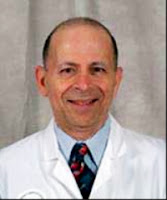 |
Kenneth J. Friedman, PhD
|
In fact, more prior investment in chronic illnesses, and a
better understanding of how they work, could have helped us to prepare for
long-haul COVID, says Ken Friedman, Ph.D., a retired professor of pharmacology
and physiology and a longtime researcher of chronic conditions.* Instead, the
medical establishment in the United States has been slow to recognize and
research chronic illness, and soon will pay the price: dealing with an
onslaught of as many as 9 million long-haul COVID cases in the coming years in
the United States alone, based on Friedman’s statistical analysis of recorded
COVID cases.
Patricia Fennell, MSW, LCSW-R, a researcher and clinician
who has been researching and treating chronic illness for more than 30 years, agrees with Friedman’s assessment. “The
medical establishment,” she says, “has been slow to recognize the need for
specific treatment approaches for the chronically ill, and to integrate them
into their medical education curricula. And from what I can already see in
requests for treatment of long-haul COVID, we are not prepared for what’s
coming.”
So far, Friedman warns, “we have not seen a response proportional
to the severity of the crisis that is about to befall us.”
* * * * * *
Friedman, a Brooklyn native, has a combined degree in biology and chemistry from Lawrence College in Appleton, Wisc., and a Ph.D. from the State University of New York at Stony Brook. He was a NIH Postdoctoral Fellow at UCLA before becoming a Staff Fellow at the National Institutes of Health. He became an Associate Professor at New Jersey Medical School in Newark. Friedman had decided he didn’t want to be a medical doctor — “I really didn’t like the sight of blood” — and was more interested in helping people through research.
One day, his desire to help people hit close to home and forever changed the trajectory of his research career.
Someone close to Friedman, an academic standout, had been admitted to a major university. After a few months at college, she became very ill, and explained her symptoms to Friedman. “I said, ‘You have mono. Go to student health services. Mono is very common in college students. They’ll know what to do'.” The student health service misdiagnosed the patient and sent her back to her dorm room. Eventually, the young patient needed to be rescued from that dorm room.
In the months that followed, the patient tried but was unable to be diagnosed through traditional channels. Friedman stepped in and persuaded the clinical faculty of his own medical school to examine and diagnose her. Unfortunately, those physicians too were perplexed and unable to render a diagnosis.
At Friedman’s suggestions, despite not having a confirmed diagnosis, treatments aimed at alleviating symptoms were tried. Eventually, the patient regained sufficient health to, in an extended timeframe, complete college and become employed. Full health, however, was never fully restored, and eventually the patient became housebound.
“Having a chronic illness,” Friedman says, “is life-changing not only for the patient, but for the family. My initial objective was to cure her. And that was based upon the belief that this was a disease like any other disease,” caused by an infectious agent, “and therefore cured by the removal of that infectious agent.”
“And that belief was based on what was written in the medical literature. But the medical literature was wrong.”
According to Friedman, Long COVID demonstrates that ME/CFS, Chronic Lyme disease, and other chronic, fatiguing illnesses which occur after a significant infection, exhibit similar symptoms and should be classified as belonging to a category of disease which he and colleagues have named PAPIS (Post Active Phase of Infection Syndromes). He and his colleagues have established an ongoing collection of research articles in the journal Healthcare to promote the publication of research articles on the subject of PAPIS. “Some 90 years after the U.S. Public Health Service first described ME/CFS as a ‘polio-like’ illness, people are beginning to understand what that means!”
“For many doctors, the strange symptomology of long-haul
Covid calls to mind another mysterious, poorly understood condition: myalgic
encephalomyelitis, more familiarly known as chronic fatigue syndrome,” wrote Moises
Velasquez-Manoffin in a January 21 New York Times article titled “What If You Never Get Better From COVID-19?”
Velasquez-Manoff went on to point out that “ME/CFS-like
syndromes have been linked with infections for more than a century — including,
most recently, those caused by the viruses responsible for the SARS and H1N1 pandemics
in 2003 and 2009.”
And according to Fennell, there is growing evidence that COVID-19
already has ignited a public-health crisis that will persist long after vaccinations
help us reach “herd immunity” and many of us put our masks away. “We are
getting increasing numbers of requests from medical professionals who either
have personally suffered COVID with the long-term symptoms themselves, or their
family members have,” Fennell says. “We are also getting requests for
consultation from physicians who are overwhelmed by the emotional burden of
caring for COVID-19 patients. Some of these clinicians are traumatized from the
care they are providing, and are suffering long-term after-effects themselves,
which is part of the larger, expanding public health issue of COVID-19.”
In addition to SARS and H1N1, Friedman says, there are “post-acute
infectious syndromes” associated with many infectious diseases, among them, mononucleosis,
Ebola virus disease, and Lyme disease.
But some of the early research into long-haul COVID and its
treatment has not taken past research into account. “What they have done,”
Friedman says, “is they have ignored the relevant data of other diseases. Why
aren’t we looking at these all together?”
Friedman and some other researchers contend that where
symptoms of long COVID are similar to those in patients suffering chronic illness
in the post-acute phase of any of these diseases, treatments previously
developed for those diseases may be effective for long COVID.
“Obviously we want to learn as much as we can about each new
infectious disease,” Friedman says, “but in the meantime, treatments have been
developed for symptoms which are similar across the spectrum. Why not apply
what we already know, and consider how the diseases may be similar?”
“Diseases tend to be viewed as silos,” he continues, “as
unique symptoms that have to be treated as no other disease is treated. The
treatment is only effective for that one disease and does not apply to any
others. That is not true.”
“The body does not care what the infective agent is.”
He offers the analogy that the body has a finite playbook of
responses for infection, and it will employ those responses to the best of its
ability to overcome the infection.
But, Friedman says, in long-haul COVID — as in ME/CFS — the
body’s response is “overblown.”
“The plays in the playbook are not perfect. And some of
those plays can do damage. Where medicine comes in, is that sometimes the
physician can control the plays in the playbook so that they do not do damage.”
The failure to apply models of care previously developed for
ME/CFS, Friedman suggests, is a symptom of a more grave issue: The medical
establishment still does not fully recognize chronic illness “as a serious
medical condition worthy of treatment. I think that most chronic illnesses are
not given as serious a consideration as are acute illnesses.”
With acute illness, he continues, “you go to a physician and
describe your symptoms, your physician develops a theory of what is wrong with
you. … And once the underlying cause is found, the physician will know how to
treat it. But for these chronic illnesses that don’t have a ‘tell,’ it becomes
much more difficult to diagnose, and much more difficult to treat. So that’s
why these conditions are not treated.”
And the U.S. government, he adds, “was very narrow in its
approach to dealing with the pandemic. They put all of their eggs in one basket
and focused on developing a vaccine, and avoided development of a treatment.”
“The CDC already has a model of care in place that would
work for long-haul COVID, and that model of care is the model they developed
for ME/CFS. The question is, ‘Why they would not implement that model of care
now?’ ”
“If they would fully implement that model, both the ME/CFS
patients and the long-haul COVID patients would be receiving care right now.”
“Going back 30 years,” says Fennell, “I, among others, have
developed treatment approaches for long-term chronic illness. They are there.
They should be adapted and used.”
Instead, Friedman fears, most people are not aware of or
prepared for the “dim picture” that awaits us down the road, with between 3 and
9 million people suffering from long-haul COVID, according to his statistical
model.
“That’s a lot of people.”
Potentially making matters worse, 3–9 million long-haulers
is a projection based on the number of people who had been diagnosed with COVID
as of a few weeks ago. But two current trends do not bode well: (1) the refusal
of a significant number of persons in the United States to be vaccinated, and (2)
the ongoing failure by the FDA to approve any treatment of COVID in its early
stages. If these trends continue, then the number of long-haulers is likely to
exceed the estimate.
“The prognosis in terms of disability, and the number of
people requiring social and financial support, is going to be very large in
comparison to other diseases,” says Friedman. “And that should be a concern.”
* Effective April 26, 2021, Kenneth Friedman has received an
academic appointment as adjunct associate professor, Department of Medicine,
School of Osteopathic Medicine, Rowan University, Stratford, N.J.
Written by Stephen Leon
© Albany Health Management Associates


